


What Is NRR?
Let’s unpack the question, what is NRR? NRR, or Noise Reduction Rating, is a standardized measurement used to indicate how much sound a hearing protection device can reduce when worn correctly.
It often is expressed as a single number and represents the potential reduction in decibels across a range of frequencies under controlled testing conditions.
How NRR Is Determined
NRR is established through laboratory testing that measures sound attenuation using human subjects in controlled environments.
During testing:
-
Sound exposure is measured with and without hearing protection
-
Results are averaged across multiple frequencies
-
The final rating reflects potential noise reduction, not guaranteed results
It does not represent exact real-world performance but provides a comparative baseline.
What Noise Reduction Rating Does—and Does Not—Tell You
NRR indicates maximum potential attenuation, not actual protection in every scenario.
Important limitations include:
-
Real-world fit can reduce effectiveness
-
Improper insertion lowers protection
-
Movement and environment affect performance
As a result, actual noise reduction is often lower than the labeled NRR.
Why is it important?
Despite its limitations, it remains essential because it:
-
Provides a standardized comparison between products
-
Establishes a minimum protection threshold
-
Supports safety planning and compliance decisions
Without NRR, hearing protection effectiveness cannot be objectively evaluated.
NRR in Earplugs, Earmuffs, and Hybrid Products
NRR applies across different hearing protection types, including:
-
Foam earplugs
-
Reusable earplugs
-
Over-ear earmuffs
-
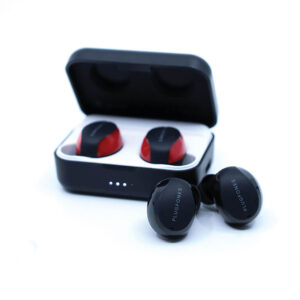
Earplugs with integrated audio
In hybrid designs, NRR reflects the physical noise reduction component, not the audio feature.
Where Earplugs With Audio Fit
Earplugs with audio are evaluated for NRR based on their ability to physically reduce ambient noise.
When properly designed and certified, they:
-
Reduce environmental sound energy
-
Allow listening at safer volumes
-
Maintain protection regardless of audio use
At Plugfones, we focus on balancing certified noise reduction with usability, ensuring protection remains the primary function.
Why Noise Reduction Rating Should Be Treated as a Baseline
It is not a performance guarantee or quality ranking, it defines the minimum expected level of protection.
Selecting hearing protection should begin with NRR, then consider fit, duration, and environment.